
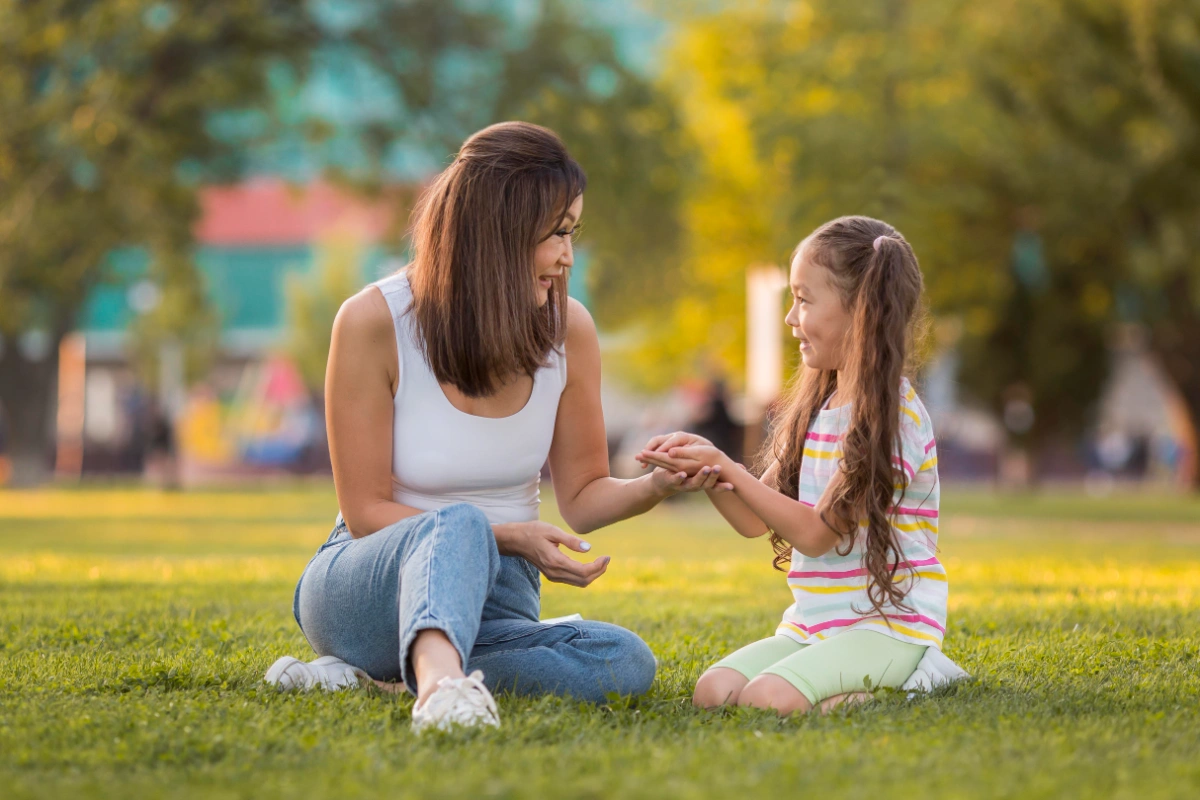
My daughter was four when she didn’t want to hug her grandmother goodbye.
My first instinct was to say, “Don’t be rude. Give Grandma a hug.”
Then I paused. Was I teaching her that she had to accept physical affection even when she was uncomfortable? That manners mattered more than her right to say no?
That moment changed how I parent.
Here’s what I realized. I want my kids to know how to set boundaries, recognize when someone crosses a line, and speak up when something doesn’t feel right.
That can’t be taught while also telling them to ignore discomfort just to be polite.
Teaching respect and boundaries isn’t one big talk. It’s built through countless small moments. How no is handled.
How personal space is respected. How consideration for others is modeled.
And it isn’t easy. Sometimes boundary-setting looks like disrespect. Sometimes honoring autonomy feels like giving up control.
These lessons will protect kids for life.
Kids will learn what healthy relationships look like, recognize when boundaries are crossed, and understand how to treat others with respect while expecting the same in return.
These six strategies are not about raising perfect kids. They focus on raising kids who understand that respect works both ways and that boundaries are non-negotiable.
1. Model Respectful Behavior
Kids observe everything. How parents speak to each other, treat service workers, and manage conflict.
If you want them to respect boundaries, they need to see you respecting boundaries.
What this looks like:
- Knocking on their closed door before entering
- Asking before touching their belongings
- Respecting when they say they need space
- Demonstrating respect in your relationships by how you speak to and about others
- Apologizing when you mess up
Kids don’t do what you say. They do what you do. If you violate their boundaries while preaching respect, they learn that boundaries are optional depending on your power level.
Instead of just walking into their room, knock and wait. Even with young kids. You’re teaching them that closed doors mean something. That their space matters.
2. Use Clear and Age Appropriate Language
Don’t use vague concepts. Be specific about what respect and boundaries mean.
For young children, keep it simple: Your body belongs to you. You decide who can touch it. When someone says stop, we stop.
For older kids, it gets more nuanced: “You can disagree with me respectfully.” “Everyone has different comfort levels about personal space.”
What this looks like:
- Using words like “consent,” “boundaries,” “respect,” “autonomy” in age-appropriate ways
- Explaining why rules exist, not just demanding obedience
- Having ongoing conversations as they grow and situations become more complex
Kids can’t follow rules they don’t understand. Vague expectations create confusion. Clear language gives them a framework.
Instead of “be nice to your sister,” try “your sister said she doesn’t want to play rough right now. That’s her boundary. You need to respect it.”
3. Encourage Open Communication

Kids need to know they can talk to you about anything. Especially uncomfortable things.
If they’re afraid of your reaction, they’ll hide things. Including times when someone’s violating their boundaries.
What this looks like:
- Listening without immediately judging or punishing
- Asking questions instead of lecturing
- Creating regular opportunities for conversation
- Staying calm when they share something difficult
- Thanking them for being honest, even when you don’t like what they’re saying
A child who can’t talk to you about uncomfortable things is a child who can’t ask for help when someone’s hurting them. Open communication is protective.
When children share something difficult, like a mean friend, a mistake, or feeling uncomfortable, the first response sets the tone.
Begin with, Thank you for telling me, before anything else.
4. Teach Consent and Personal Space

This isn’t just about physical touch. It’s about respecting others’ choices, belongings, and comfort levels.
Every interaction is an opportunity to teach consent.
What this looks like:
- “Can I give you a hug?” instead of just grabbing them
- “Your friend said no to playing that game. Let’s find something you both want to do.”
- “You don’t have to hug/kiss relatives if you don’t want to. You can wave or highfive instead.”
- “Before you borrow your sister’s toy, you need to ask her. It’s hers.”
- Teaching them to ask friends before hugging, play-fighting, or touching
Kids who learn early that “no” means something grow into adults who respect others’ boundaries and expect their own to be respected.
When Grandma insists on a hug and your child resists, support your child. Explain, She is not comfortable with hugs right now but would like to blow you a kiss.
This teaches that relationships don’t require physical affection and that her comfort matters.
5. Set Consistent Rules and Consequences
Boundaries need structure. Kids need to know what’s expected and what happens when boundaries are crossed.
But, and this is important, consequences should focus on teaching, not punishment.
What this looks like:
- Clear, consistent rules about respect: we don’t hit, we don’t call names, we stop when someone says stop
- Natural consequences when possible: “You took your brother’s toy without asking. You need to give it back and apologize.”
- Following through every time, not just when you’re in the mood to enforce it
- Consequences that teach rather than shame
Inconsistency teaches kids that boundaries are flexible depending on mood. Consistency teaches that boundaries are real and important.
If the rule is asking before taking someone’s things and it’s broken, the consequence is returning it immediately and apologizing. Every time, without exception.
6. Praise Respectful Choices

Notice when they get it right. Call it out. Celebrate it.
Kids repeat behavior that gets positive attention.
What this looks like:
- “I noticed you asked your brother before borrowing his game. That was respectful.”
- “You stood up for your friend when someone was being mean. I’m proud of you.”
- “You told me you were uncomfortable at that playdate. That took courage.”
- “I saw you walk away when you were getting frustrated instead of hitting. That was a great choice.”
Kids need to know what “respect” looks like in practice. Catching them doing it right reinforces the behavior you want.
Your child tells you they didn’t like how a friend was treating them and decided to play with someone else.
Instead of simply acknowledging it, truly celebrate it. Say, That was very smart.
You noticed a boundary being crossed and protected yourself. I’m proud of you for listening to that feeling.
Thoughts From Me to You
Teaching kids about respect and boundaries is one of the most important things you’ll do as a parent.
It’s uncomfortable because it asks you to respect kids even when it’s inconvenient, give them autonomy when you’d rather enforce compliance, and let them say no even if it feels disrespectful.
It challenges what you learned growing up. If you were taught children should be seen and not heard, it feels radical. If obedience to adults was drilled in, it feels risky.
Kids who learn boundaries don’t grow up disrespectful. They become discerning, knowing the difference between respecting authority and blindly obeying.
They see when respect is mutual and when it is demanded.
They grow into adults who can say no, recognize abuse, set healthy boundaries, and spot manipulation.
In a world where others may try to violate boundaries in relationships, at work, and beyond, that protection is invaluable.
This doesn’t mean letting them do whatever they want. Rules and boundaries are still important, but they should teach respect, not just demand compliance.
Say things like, I understand you’re frustrated, but yelling isn’t respectful. Let’s take a break and try again when we’re both calm.
Avoid, You don’t get to talk to me that way. Go to your room. The first teaches, the second demands submission.
You won’t get it right every time. You’ll slip into old patterns, cross boundaries, and have to apologize. Sometimes you’ll demand obedience when the goal is teaching respect.
That’s okay. Growth is messy, and parenting is trial and error.
If consistency becomes the norm, if you model what you teach, and if you respect them while guiding them to respect others, you are giving them tools for life.
Kids will learn what healthy relationships feel like. They will recognize red flags, have language for discomfort, and understand that their voice matters.
That makes the discomfort of changing parenting worthwhile. It makes the hard work of modeling respect, even when tired or frustrated, worthwhile.
Your kids are watching. What they see now shapes who they become later.
Demonstrate that boundaries matter, respect is mutual, and their voice deserves to be heard.
This is how to raise kids who understand their worth and treat others with dignity.
And that’s the kind of humans the world needs more of.