

Life is not always smooth and that is the truth.
Work can become overwhelming. Plans fall apart. Relationships change. Unexpected challenges appear
With a strong mindset chaos does not break a person but helps them grow
Relationships get complicated. Health issues arise. Financial pressure builds. Family drama erupts.
At some point, peace feels lost. Anxiety and overwhelm take over, and life becomes a series of automatic reactions just to get through the day.
It is possible to reclaim calm. Peace does not arrive only when circumstances are perfect.
Waiting for life to settle before finding peace only keeps it out of reach.
Peace is something you reclaim. Actively. Intentionally. Even in the middle of chaos.
Change is not always about circumstances, though adjustments may be needed. It is about how situations are responded to.
When life feels chaotic, exhausting, and overwhelming, finding a sense of calm is possible.
Here are 12 ways to reclaim your peace when life gets messy. Not someday when things settle down. Right now, in the middle of it.
12 Ways to Reclaim Your Peace When Life Gets Messy
1. Slow down and breathe
Stop moving at a frantic pace. Pause. Take deep, intentional breaths.
When everything feels chaotic, your nervous system goes into overdrive. Slowing down and breathing signals your body that you’re safe.
Set reminders throughout the day to take five deep breaths. In for four counts. Hold for four. Out for four.
When overwhelm hits, take a moment before responding. Focus on the breath first, then act.
Breathing deeply is the quickest way to soothe the nervous system, moving out of panic and into the present.
Control over everything around is impossible, but control over the breath is always possible, and that is where calm begins.
2. Detach from what you can’t control

Stop trying to control things outside your power. Other people’s opinions. Past mistakes. Future outcomes.
Pay attention to what can actually be influenced: thoughts, actions, and responses.
When stress arises, determine whether the situation is controllable. Act on what can be changed and release what cannot.
A practical approach is to write down sources of stress, mark what is within control, eliminate what is not, and focus solely on what can be addressed.
Most of your stress comes from trying to control the uncontrollable. When you release what’s not yours to manage, you free up mental and emotional energy.
Acceptance isn’t giving up. It’s recognizing what’s outside your control so you can focus your energy where it actually matters.
3. Limit social media and digital noise
Social media amplifies chaos. Everyone’s opinions. Constant bad news. Comparison traps.
When life’s already messy, digital noise makes it worse.
Set time limits on apps. Delete apps temporarily if needed. Turn off notifications. Designate phone-free hours.
Replace scrolling with something restorative—reading, walking, sitting in silence.
The brain has a limit to how much information it can handle. Constant exposure to social media floods the mind with unnecessary input.
Cutting down on digital noise allows room for mental calm and clarity.
4. Prioritize rest and sleep

Stop wearing exhaustion like a badge of honor. Rest is not laziness—it’s necessity.
Sleep isn’t optional. When you’re running on fumes, everything feels harder than it is.
Set a consistent bedtime. Create a calming nighttime routine. Turn screens off an hour before bed.
When a full night of sleep isn’t possible, short naps help. If naps aren’t an option, pause to sit quietly and do nothing.
The mind and body need rest to operate effectively. Without it, stress builds, emotions become stronger, and calm fades.
Rest is not a reward after everything is finished. It is what makes continuing possible.
5. Create boundaries without apologizing
It is okay to say no to protect time and reduce contact with those who drain energy.
Boundaries are necessary for self-care. Recognize what disturbs calm and create limits to protect it.
Decline without lengthy explanations using simple statements like cannot, that does not work, or need space right now.
Don’t apologize for protecting your peace.
Without boundaries, the chaos of others is taken on. Stress, drama, and problems from those around become personal burdens.
Boundaries create a buffer that protects your peace from being constantly invaded.
6. Journal your thoughts and emotions

Get what’s in your head onto paper. Don’t keep everything bottled up.
Journaling isn’t about perfect writing. It’s about releasing what’s weighing on you.
Write for 10 minutes every morning or night. No rules. Just pour out whatever you’re feeling.
Don’t edit. Don’t judge. Just release.
When thoughts stay in your head, they loop endlessly. Writing them down breaks the cycle.
Journaling creates clarity. It helps you process emotions instead of suppressing them. And sometimes, just naming what you’re feeling reduces its power over you.
7. Spend time in nature

Get outside. Away from screens, noise, and indoor chaos.
Nature has a way of putting things in perspective.
Take walks. Sit outside. Watch the sunrise or sunset. Feel the sun. Listen to birds.
A mountain or beach is not required. Even a backyard or local park provides the same benefit.
Being in nature soothes the nervous system and offers perspective beyond immediate stress.
Fresh air. Natural light. The simple act of being outside shifts your energy.
8. Practice gratitude daily
Even amid chaos, something positive exists. Noticing it redirects attention from problems to what is going well.
Each day, note three things that bring appreciation. They do not need to be grand—a warm bed, a good cup of coffee, or a kind message suffice.
When stress arises, identify one positive element.
Practicing gratitude reshapes the mind, helping to see good even in difficult moments.
Anxiety and gratitude cannot coexist. Gratitude acts as a counterbalance to stress.
9. Surround yourself with calm, supportive people

Time spent with others impacts inner calm. Turbulent individuals bring turbulence, while composed individuals bring calm.
Select company thoughtfully. Reduce time with those who drain energy, even if affection exists, and maintain distance when needed.
Prioritize being around people who provide stability, support, and ease.
Energy transfers quickly, and constant exposure to stress and drama results in absorption.
But when you surround yourself with peace, you protect your own.
10. Declutter your physical space
Cluttered space equals cluttered mind. Your environment affects your mental state.
Start small. Clear one surface. One drawer. One corner.
Get rid of things you don’t need or use. Create order in your immediate space.
When your physical space is chaotic, it’s hard to find mental peace.
But when your environment is calm and organized, it’s easier to feel calm internally.
Order externally supports peace internally.
11. Pray, meditate, or connect spiritually
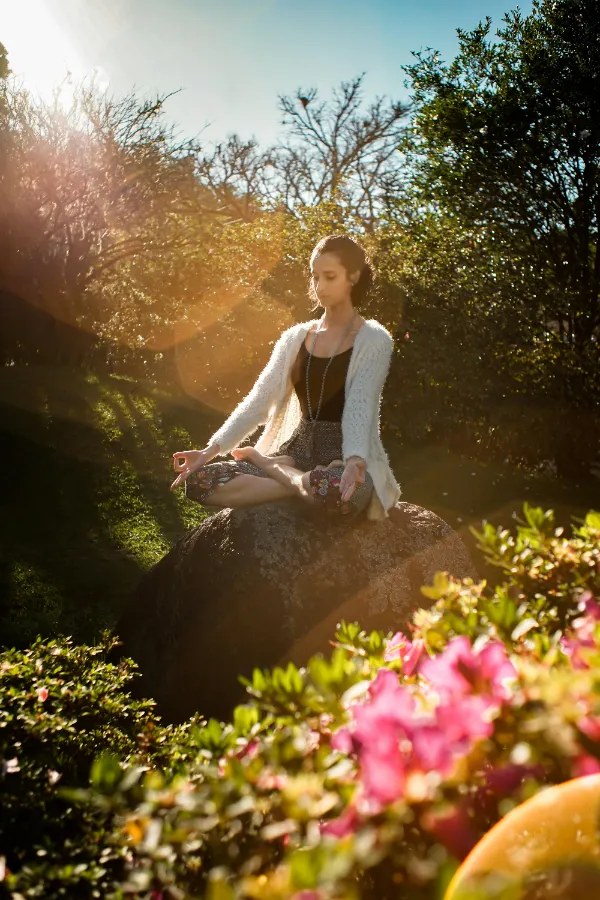
Connect with something bigger than yourself. Whether it’s God, the universe, or a higher purpose.
Spirituality grounds you when life feels out of control.
Pray daily. Meditate for five minutes. Read scripture or spiritual texts. Sit in silence and just be present.
Surrender what you can’t control to God or a higher power.
A spiritual connection offers the reminder that burdens are not carried alone.
It changes the view from having to handle everything independently to feeling guided and supported.
Faith in any form brings a sense of calm that goes beyond current circumstances.
12. Give yourself permission to start over

It is not necessary to continue on the same path. If something fails to work, it can be changed.
Shifting direction, resetting, and beginning anew are always possible.
Identify what’s stealing your peace. Then decide: Can I change this? Do I need to let this go? Do I need to approach this differently?
Give yourself permission to make changes without guilt.
Sometimes you lose peace because you’re clinging to things that no longer serve you.
Beginning again, whether with thoughts, habits, relationships, or objectives, is not failure. It is a sign of insight and wisdom.
Let’s be clear
Reclaiming peace doesn’t mean your life suddenly becomes easy. It means you learn to stay grounded even when it’s not.
These are ongoing practices, daily decisions, and commitments to oneself. Some days may include all of them, while other days only one is possible.
Peace is not perfection, but progress.
It shows up in taking rest when needed, setting limits when overwhelmed, breathing through anxiety, and letting go of what cannot be controlled.
Control over events may be impossible, but control over responses is always within reach.
In the gap between events and responses, calm and peace are found.
So start today. Pick one thing from this list. Just one.
Slow down and breathe. Limit social media. Journal. Spend time outside. Practice gratitude.
One small act of reclaiming peace. Then another. Then another.
Because peace isn’t something you find when life calms down. It’s something you create in the middle of the storm.
And you deserve it. Right now. Even when life’s a mess.
Especially when life’s a mess.