

There’s someone amazing who’s shown interest – kind, funny, respectful, everything that seemed worth praying for.
Except one thing: they don’t share the same faith.
Maybe they’re not religious at all. Maybe they follow a different faith tradition. Or perhaps they’re “spiritual but not Christian” in that vague way that’s hard to define.
And now there’s this internal war happening. Heart saying one thing, faith saying another, and everyone around having strong opinions about what should happen next.
The “do not be unequally yoked” verse keeps coming to mind, but so does the memory of every terrible date with Christian guys who had faith on paper but no character in practice. This person treats people with genuine kindness and respect – shouldn’t that matter?
Here’s what makes this decision so complicated: faith isn’t just about Sunday mornings or personal beliefs. It shapes entire worldviews, life decisions, parenting approaches, and daily priorities.
Dating someone means potentially building a life with them, and faith differences don’t get easier with time – they get more complex.
This isn’t about judging anyone’s worth or saying non-Christians can’t be incredible people. Many are.
This is about honestly assessing whether fundamental differences in faith will create barriers that love alone can’t overcome.
Before moving forward, some hard questions deserve honest answers – not the answers that sound right, but the ones that are actually true.
7 Questions to Ask Yourself Before Dating Someone Who Isn’t Christian
Question #1: How Strong Is My Own Faith?
Be brutally honest here, because this matters more than anything else.
Is faith the foundation of life, shaping decisions, priorities, and identity? Or is it more of a cultural background thing – important but not exactly central to daily existence?
If faith is lukewarm or mostly social, dating someone without that faith might not create much friction.
Church attendance might drop off, prayer might become less frequent, but if those things weren’t deeply rooted anyway, the change might feel manageable.
But if faith is genuine and active – if relationship with God is the most important thing, if Scripture guides decisions, if spiritual growth is a real priority – then dating someone who doesn’t share that foundation creates immediate tension.
People naturally drift toward their closest relationships. The person being dated becomes the primary influence, the main voice, the biggest priority. If that person doesn’t share or support faith, maintaining it becomes exponentially harder.
There’s a reason the Bible talks about iron sharpening iron. When both people are pursuing God, they push each other toward growth.
When only one person has that pursuit, they’re either dragging someone along who doesn’t care, or getting pulled away from what matters most.
Strong faith can survive a lot of challenges, but it struggles to thrive in isolation, especially when the person closest refuses to share that journey.
Question #2: Am I Hoping to Change or Convert Them?
This might be the most dangerous question to answer dishonestly.
Is the thought process something like: “I’ll date them, they’ll see how amazing Christianity is through me, they’ll fall in love with Jesus, and everything will work out perfectly”?
Because that’s not a relationship – that’s a conversion project with romance as the strategy.
Dating someone with the hidden agenda of changing their faith is manipulative, no matter how good the intentions. It’s not loving them for who they are; it’s tolerating who they are while hoping they become someone else.
It also puts unfair pressure on the relationship. Every spiritual conversation becomes loaded. Every Sunday morning becomes a test of progress. Every prayer that doesn’t get answered feels like failure.
And here’s what nobody wants to admit: people rarely convert because they fell in love with someone Christian. They convert when they encounter God themselves, on their own terms, in their own timing. Using romance as an evangelism tool usually backfires spectacularly.
If the honest answer includes “but I really think they’ll come around” or “they seem open to learning more” – that’s a massive red flag. Those are hope statements, not reality statements.
Don’t date someone’s potential. Don’t date the person they might become if everything goes according to plan. Date who they actually are right now, and decide if that’s genuinely compatible with faith and life goals.
Question #3: Do We Share the Same Core Values?

Faith shapes values, but values can sometimes overlap across different belief systems.
Someone doesn’t need to be Christian to value honesty, kindness, commitment, family, service, or integrity. Non-Christians can absolutely embody these qualities – sometimes better than people sitting in church pews every Sunday.
But here’s where it gets tricky: when push comes to shove, what’s the foundation under those values?
For Christians, values ultimately root in who God is and what Scripture teaches. Honesty matters because God is truth.
Love matters because God is love. Sacrificial commitment matters because that’s how Christ loved the church.
For non-Christians, values might root in humanism, personal philosophy, cultural upbringing, or practical reasoning. These can create similar behavioral outcomes but with completely different foundations.
This matters most when those values get tested. When sacrifice is required. When forgiveness seems impossible. When making the “right” choice means losing something valuable.
What happens when values conflict with personal desires? If faith grounds values, prayer and Scripture become the tiebreaker. But if values are more flexible or personally determined, decisions might go very differently.
Have actual conversations about this. Not hypothetically, but specifically. How are financial decisions made?
What does commitment mean when feelings fade? How is conflict resolved? What does forgiveness look like? What role does community play?
Surface-level value alignment might work for casual dating, but building a life requires going deeper than “we both think honesty is important.”
Question #4: How Will This Affect My Relationship With God?
This question requires painful honesty about patterns and tendencies.
Some people have an incredibly resilient faith that stays strong regardless of external circumstances.
They can maintain vibrant relationships with God even when surrounded by people who don’t share that faith.
But that’s not most people. For most believers, faith needs community, accountability, and shared pursuit to stay healthy. Remove those elements, and drift happens – slowly, subtly, but definitely.
Dating someone who doesn’t share faith creates inherent isolation in the most important area of life. The person who should be the closest partner, the most intimate confidant, can’t relate to the relationship that matters most.
There’s no one to pray with through real struggles, to talk through spiritual questions, to encourage church attendance when motivation fades, or to strengthen faith and challenge comfort zones.
Instead, there’s someone who may tolerate faith but doesn’t engage with it — who respects beliefs but doesn’t share them, and who struggles to understand why certain things matter or why choices are guided by a spiritual lens.
This isn’t their fault – they simply don’t have the framework. But it creates distance in the exact place that should have the most unity.
Some people can maintain strong faith despite this. Others find themselves slowly compromising, skipping church, praying less, reading Scripture rarely, and losing the vibrancy that once defined their relationship with God.
Which category is honest? Not aspirational, but actually realistic given past patterns and tendencies?
Question #5: What Happens If We Get Married or Have Kids?
Dating feels manageable because the stakes seem lower.
But dating leads somewhere, and that somewhere makes everything more complicated.
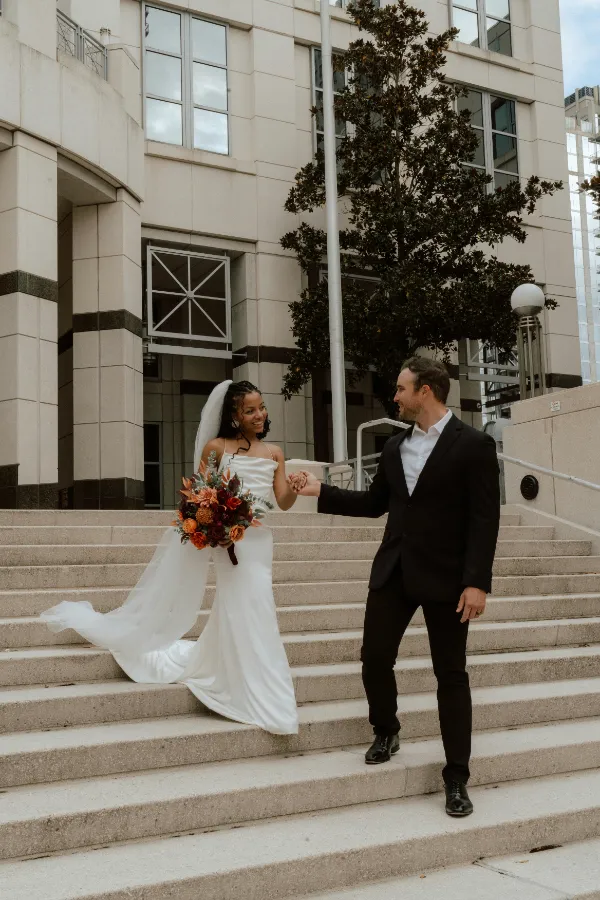
If this relationship leads to marriage, faith differences become daily friction points rather than occasional discussions.
Where is Sunday morning spent? Church together (with one person uncomfortable), separate activities (creating division right at the start of each week), or nowhere (meaning faith practice just stops)?
How is money handled? Are tithes and offerings given, or is that seen as unnecessary? Are financial decisions prayed about or made pragmatically?
What community is prioritized? Faith community that one partner can’t fully engage with, or secular community that doesn’t support spiritual growth?
And then comes the biggest question: children.
How are kids raised? In the faith, outside of it, or in some vague middle ground that satisfies no one and confuses everyone?
Who takes them to church? Just one parent while the other stays home?
Both parents going to activities they don’t believe in? Or no church at all because it’s too complicated?
What do kids absorb when they see mom praying but dad doesn’t?
When one parent reads the Bible and the other doesn’t? When faith is clearly important to one parent but optional to the other?
Kids learn what’s real by watching what adults prioritize. When parents have fundamental disagreements about ultimate truth and purpose, kids notice. They internalize that division.
Some couples navigate this successfully, but it requires constant negotiation, compromise, and usually one person giving up more than they expected.
Is that the foundation wanted for a marriage? For a family? Are those compromises acceptable long-term, or are they things that will breed resentment over years?
Question #6: Do My Family and Spiritual Community Support This?
This question matters more than pride wants to admit.
When people who love someone and know them well all have concerns about a relationship, they might be seeing things that emotions are obscuring.
If parents, siblings, close friends, mentors, and faith community are all expressing hesitation or outright opposition – that’s not everyone being judgmental. That’s people who care trying to protect from future pain.
They’re not in the emotional whirlwind. They can see patterns and red flags more clearly. They understand how faith shapes life in ways that feel abstract right now but become concrete later.
Their concerns deserve genuine consideration, not defensive dismissal.
This doesn’t mean they have veto power over relationships.
Ultimately, decisions are personal and between the individual and God. But consistently ignoring wisdom from people who care usually leads to regret.
Also consider: what does it mean for community and support systems if this relationship continues?
Will the church community stay welcoming and supportive, or will distance start to grow? Will faith-based friendships endure bringing a non-Christian partner along, or will social circles gradually drift apart?
Some communities handle this gracefully. Others don’t. Either way, it affects the support network needed for healthy relationships and spiritual growth.
Isolation from the faith community to avoid awkwardness or judgment creates vulnerability.
Faith wasn’t meant to be maintained alone, and deliberately cutting off that community for a relationship raises questions about priorities.
Question #7: Have I Prayed About This Decision?

Not just quick, surface-level “God, what should I do?” prayers, but genuine, sustained seeking of God’s will with willingness to accept whatever answer comes.
Real prayer includes listening, not just talking. It includes waiting for peace that confirms direction, not just making decisions and asking God to bless them afterward.
Have there been times of serious prayer asking God:
- Is this relationship wise?
- What are the real motivations here?
- Where is this leading?
- What are the blind spots?
- What’s Your will, even if it’s not what’s wanted?
And most importantly: is there genuine willingness to obey what God reveals, even if He says no?
Because that’s the real test. Praying while hoping God will confirm existing desires isn’t really prayer – it’s seeking permission for decisions already made.
If prayer hasn’t been consistent and genuine about this relationship, that avoidance is revealing. Maybe there’s fear of what God might say. Maybe there’s awareness that His answer probably won’t align with what’s wanted.
Either way, moving forward in a major relationship decision without prayer and God’s peace is building on sand, not rock.
God’s will isn’t always immediately clear, but consistent prayer, Scripture reading, and seeking godly counsel eventually brings clarity. If that clarity keeps getting avoided, it’s probably because deep down, the answer is already suspected and just not liked.
Here’s My Take
I’m not going to categorically tell anyone “never date a non-Christian” because life is complex and people’s situations vary tremendously.
Some Christians have found themselves in relationships with non-believers who eventually came to faith. Some have built good marriages despite faith differences. Some have navigated these waters successfully.
But I will say this honestly: it’s hard. Really, really hard.
Every Christian I know who married someone outside the faith has faced challenges they didn’t fully anticipate. The differences they thought love would overcome became bigger over time, not smaller.
The compromises they thought they could make comfortably ended up feeling like losses. The isolation they didn’t expect in their most important relationship became lonely and difficult.
Some have made it work, but none would say it was easy or recommend the path to others.
The Bible’s warning about being unequally yoked isn’t arbitrary religious rules. It’s protective wisdom from God who knows how relationships work and how faith needs support to thrive.
When two oxen are yoked together to plow, they need to pull in the same direction with the same strength. Otherwise, they work against each other, making the task harder and creating strain.
That’s the metaphor. In relationships, when partners are pulling in fundamentally different directions – toward different ultimate purposes, different value systems, different foundations – the strain is constant.
If faith is genuinely important – not just nice to have but actually foundational – then sharing that faith with a life partner isn’t optional. It’s essential.
It’s not about seeing non-Christians as unworthy or lesser. Many are wonderful people. But a relationship with God needs support, not distance or resistance, to truly thrive.
Whatever decision gets made here, make it with eyes wide open. Don’t minimize faith differences hoping they won’t matter later. Don’t assume things will magically work out. Don’t trust feelings over wisdom.
Pray genuinely. Listen to people who care. Be honest about faith, strength and patterns. Consider long-term implications, not just current emotions.
And most importantly: trust that if God says no to this relationship, it’s because He has something better.
His plans are always for good, even when they require letting go of things that feel good right now.